
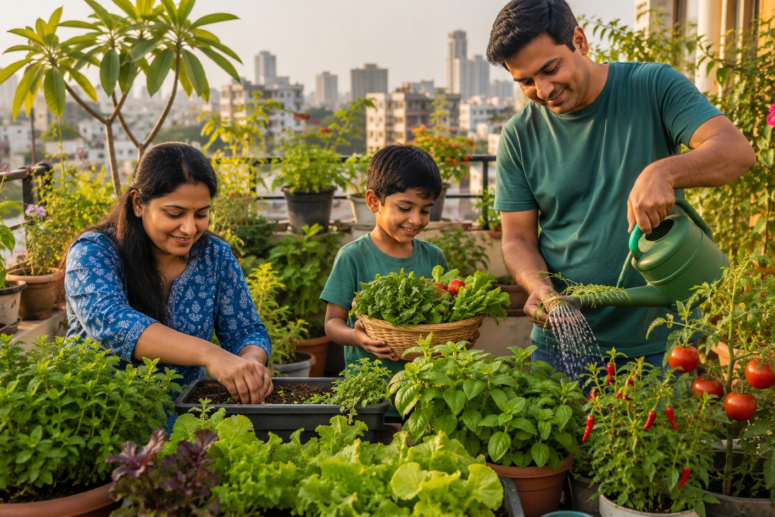
Home food growing is becoming more common in India for a simple reason: it solves everyday problems. It helps people stretch their budgets, get fresher produce, use small spaces well, and build a habit that feels useful instead of decorative. In cities especially, kitchen gardens, terrace beds, balcony pots and even a few herb planters have become a practical part of modern living.
1) People eat most meals at home, so growing at home makes sense
A key reason is that Indian households already eat most of their food at home. A CEEW report notes that Indians consume about 95% of meals at home, while only about 5% are eaten outside. The same report also says nutrient-dense foods such as green leafy vegetables, pulses, roots, tubers and nuts are still under-consumed in the average diet. That makes home-growing feel practical: if food is already being prepared at home, growing even a little of it at home becomes a logical next step.
2) Food prices keep pushing people toward small-scale self-reliance
Food inflation has also made people more aware of how much vegetables and pulses can swing in price. India’s Economic Survey for 2025 says food items make up about two-fifths of the CPI basket, and that food inflation has recently been driven mainly by a few items, especially vegetables and pulses. Even a small home garden cannot replace every grocery item, but it can reduce dependence on expensive daily herbs, greens and seasonal vegetables.
3) Small spaces are enough now
Another big reason is that people no longer think they need a full yard to grow food. Urban farming in India is increasingly tied to rooftops, balconies, community plots and other unused urban spaces. IBEF describes this as a community-driven movement focused on self-sufficiency, with gardens and edible spaces taking root in major metro cities. In other words, people are not waiting for the perfect farm anymore; they are using the space they already have.
4) Gardening is now part food habit and part lifestyle habit
For many households, growing food at home is also about wellness, routine and a calmer lifestyle. Recent coverage of indoor gardening in India describes houseplants as lasting lifestyle choices, not just a pandemic-era phase. Research among urban women homemakers in Lucknow also shows that sustainable kitchen gardening is being adopted in real homes, with people trying it for food access, environmental benefits and better daily living.
5) It gives people more control over what they eat
Home-growing appeals to people who want fresher, cleaner and more predictable produce. A study on sustainable kitchen gardening in Lucknow notes that urban gardening can support food security and sustainability, while also helping households access better-quality food. That is one reason kitchen gardens, herb shelves and terrace plots feel so rewarding: people get food they can see growing, harvest themselves, and use immediately.
6) It fits the rise of urban and community farming
Urban farming is no longer niche. The IBEF piece says India’s city farming movement is growing in metro areas such as Mumbai, Delhi, Bengaluru, Chennai and Hyderabad, with community gardens, rooftop growing and even hydroponic setups gaining visibility. That wider movement makes home food growing feel normal, modern and socially supported. When people see neighbours, relatives or social media creators growing something successfully, they are more likely to try it themselves.
7) It starts small and feels do-able
One reason home gardening has grown is that it is easy to begin. A few pots, some good potting mix, a sunny window or balcony, and one or two easy crops are enough. That low barrier matters. People do not need to become full-time growers; they just need to start with basil, mint, coriander, chillies, curry leaves, or a few leafy greens and learn as they go. The Lucknow study also shows that people need some confidence and basic growing knowledge to keep kitchen gardens going, which is why simple guidance matters so much.
8) It is good for the mind as well as the plate
For many people, growing food is also a stress-relief activity. Indoor and balcony gardening is increasingly being linked to wellness, mindfulness and a slower daily routine in Indian lifestyle coverage. That emotional reward matters. A plant that grows well is not just useful; it also gives a small daily win.
What people usually grow first
Most beginners start with crops that are quick, useful and forgiving. Herbs, leafy greens, chillies, coriander, mint, curry leaves and a few flowers are common first choices because they fit small spaces and give quick results. That is why starter kits, potting mixes and small nutrient packs work so well for this audience.
Why this matters for Biosar
For Biosar, this trend is important because it brings together all the audiences you serve: farmers, tea gardens, hobby gardeners and people who just want to grow a little food at home. Home growers usually need small packs, simple instructions and beginner-friendly support. That makes this a strong topic for content, product bundles and Amazon-based retail packs.
A blog like this can naturally lead into starter kits, potting mixes, small nutrient packs, herb guides and WhatsApp help for beginners.
More Indians are growing food at home because it is practical, affordable, calming and meaningful. It helps with food prices, fits small spaces, supports healthier eating and gives people a stronger connection to what they eat. For many households, that makes home growing less of a hobby and more of a habit.