Author: Biosar

TEA FLUSH CALSENDAR & SIMPLE NUTRION PLAN

Role of Biostimulants in Crop Growth and Stress Management

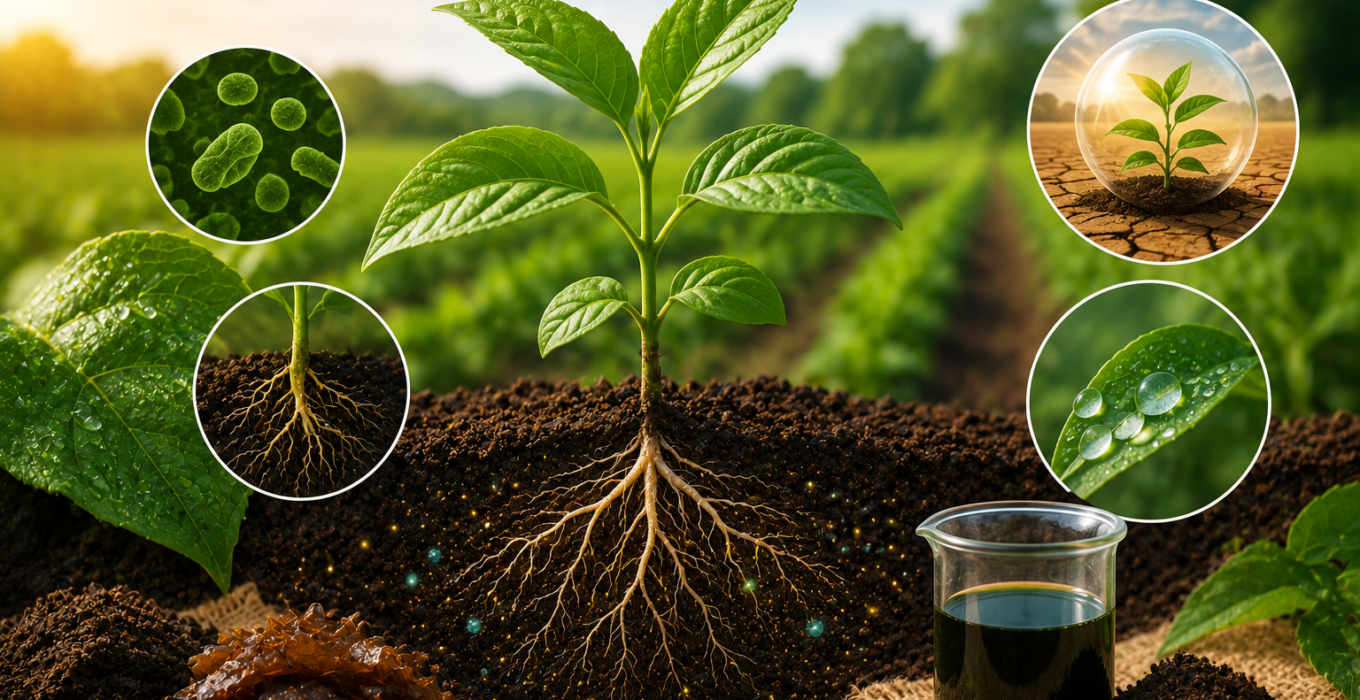
Biostimulants are one of the most talked-about tools in modern crop nutrition because they help plants do more with the nutrients and conditions already available to them. In simple terms, a biostimulant is a substance or microorganism applied to the plant or soil to improve growth, nutrient-use efficiency, stress tolerance, root development, or crop quality. They are not pesticides, and they do not replace fertilizers; instead, they work alongside normal nutrition and crop management.

What biostimulants actually do

Their biggest value is that they help crops respond better to stress and nutrition. FAO describes biostimulants as helping with nutrient availability in the soil or rhizosphere, improving water-use efficiency, increasing uptake of applied or existing nutrients, and supporting tolerance to abiotic stress. Reviews of crop studies also show that biostimulants can improve plant growth, crop quality, and resilience under drought, heat, cold, and salinity stress.

That makes them useful in situations where a crop is not just “hungry,” but also under pressure. Heat waves, dry spells, transplant shock, poor root activity, and nutrient imbalance can all reduce performance. Recent agricultural research has shown that some commercial biostimulants can help plants cope with heat stress, while broader reviews note improvements in antioxidant activity, protective compounds, and stress-response pathways.

How they help crops grow better

Biostimulants work in several ways. Some improve root growth, so the plant explores more soil. Some help the crop absorb nutrients more efficiently. Some stimulate protective compounds such as antioxidants, proline, or heat-shock proteins that help the plant survive tough weather. Others improve microbial activity around the roots, which can make nutrients easier to access and support stronger overall plant health.

In practical farming terms, this can mean better early growth, stronger rooting after transplanting, improved flowering or fruit set, and better recovery after stress. That is why biostimulants are especially popular in horticulture, plantation crops, and high-value crops where even a small improvement in vigour or stress recovery can matter a lot.

What kinds of biostimulants are common

Biostimulants are a broad group. Reviews commonly mention humic and fulvic acids, seaweed extracts, amino acids, protein hydrolysates, chitosan, arbuscular mycorrhizal fungi, and plant-growth-promoting rhizobacteria. In other words, biostimulants can be organic compounds, extracts, or live microorganisms depending on the product and the crop need.

That variety is important because different crops and stress situations need different support. A transplant under heat stress may benefit from a root- and stress-oriented product, while a fruiting crop may need a product that supports nutrient uptake and fruit quality. There is no single “best” biostimulant for every situation.

Biostimulants are not a substitute for good agronomy

This is the most important point for beginners. Biostimulants can support crop growth, but they do not replace proper irrigation, soil health, balanced fertilization, pest management, or the right variety for the region. FAO also notes that biostimulants do not have direct action against pests, so they do not fall under pesticide use in the same way.

That means the best results usually come when biostimulants are used as part of a sensible crop plan: healthy soil, correct sowing time, enough water, and nutrition matched to crop stage. When used that way, they can improve efficiency and reduce stress losses.

Why this matters for stress management

Climate stress is becoming a bigger issue, and FAO’s 2024 discussion on abiotic stress and climate change highlights biostimulants as a useful tool for strengthening crop resilience. The practical idea is simple: if a plant can keep its metabolism steadier under heat, drought, or salinity stress, it has a better chance of maintaining growth and yield.

Research summaries also show that biostimulants may help reduce harmful reactive oxygen species, improve antioxidant enzyme activity, and increase the plant’s internal defence systems under stress. That is why they are often discussed as “stress mitigators” rather than just growth boosters.

How Biosar fits into this space

Biosar already has products that sit naturally in this biostimulant-and-soil-health direction. On its site, Grovita is described as a biostimulant plant growth enhancer with humic acid, fulvic acid, and bio-enhancers, while Natura is a humic-acid liquid growth booster. Biosar also offers HIRA and HIRA Plus, bio-enriched organic manures with beneficial bacteria that support soil fertility and plant growth.

That matters because growers often need a practical bridge between “nutrient management” and “stress management.” Products in this category can help improve root activity, soil biology, and nutrient availability, which makes them useful for farmers, tea gardens, and even serious home growers looking for stronger, steadier plant growth.

Biostimulants are best understood as helpers that improve how a crop grows, absorbs nutrients, and handles stress. They do not replace fertilizers or crop protection, but they can make both the plant and the soil work better together. For Indian agriculture, where heat, water stress, and soil fatigue are real challenges, that makes biostimulants a very practical part of the future.

TEA FLUSH CALSENDAR & SIMPLE NUTRION PLAN

How to Protect Crops from Extreme Summer Heat?

Extreme summer heat can hit crops fast. In April 2026, the India Meteorological Department warned that heat-wave conditions were likely in parts of northwest, central, and adjoining east India, which is a strong reminder that farmers need a heat plan before the damage begins.

Heat stress matters because high temperatures increase crop water loss, raise soil evaporation, and can disturb growth just when plants need stability most. FAO guidance on water stress and land management notes that protecting the soil surface and improving moisture retention are key ways to reduce heat-related stress.

1) Keep the soil covered

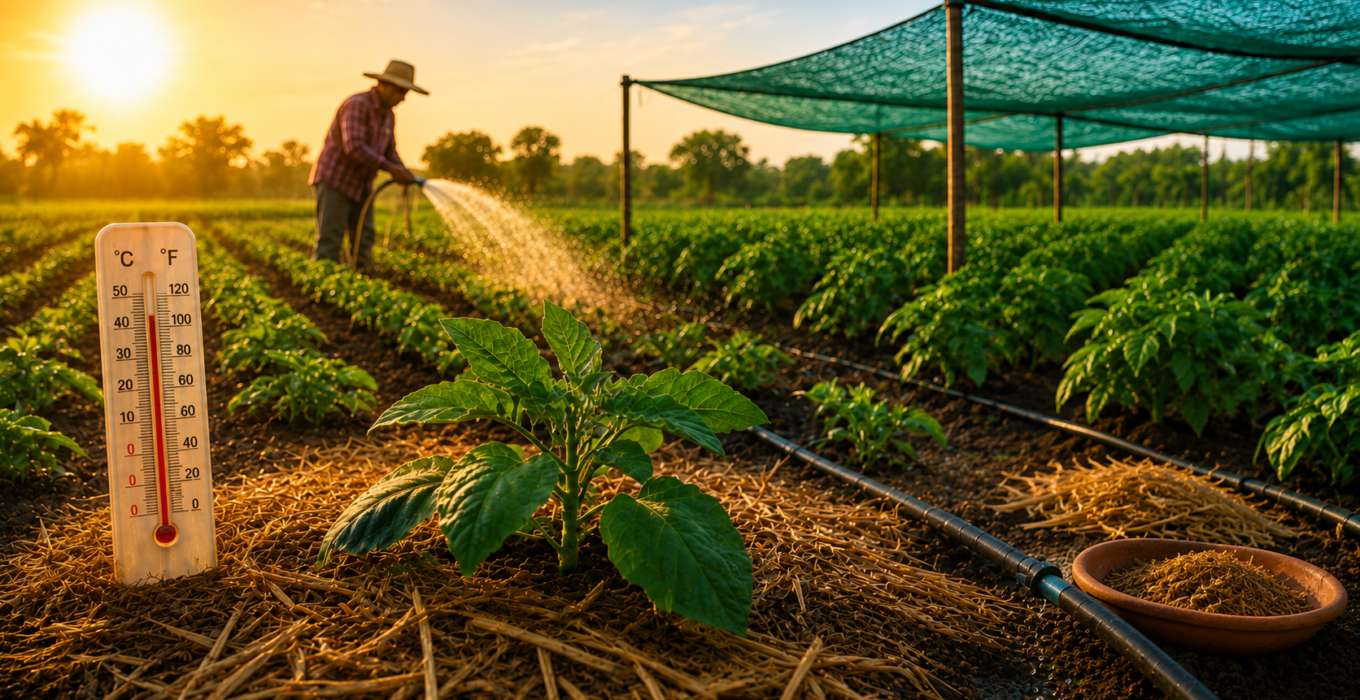
One of the simplest and most effective summer heat protections is mulch. FAO notes that mulching reduces soil evaporation and helps improve the micro-climate around crops, while Indian heat advisories from IMD specifically recommend straw mulch in vegetables and orchard crops to reduce evaporation.

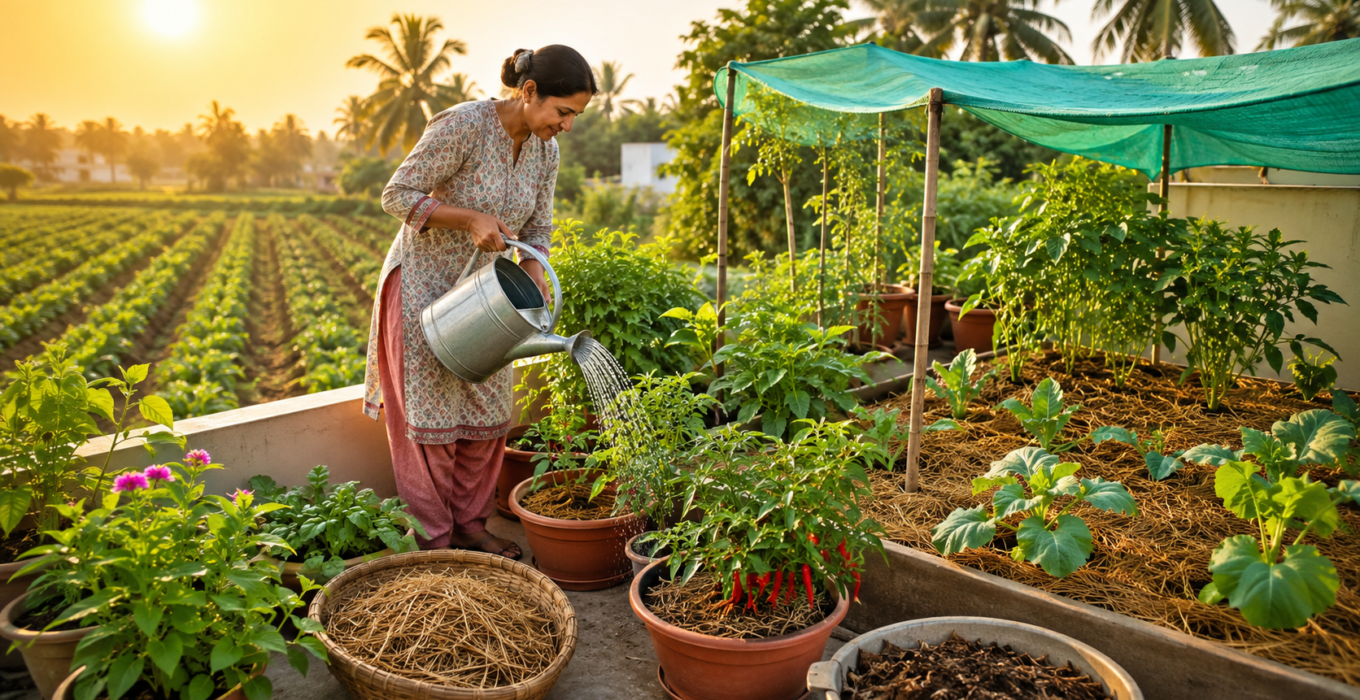
For farmers, this means using straw, crop residue, compost, or other safe organic mulch around the root zone. For home gardeners, even a light mulch layer in pots can help the soil stay cooler for longer.

2) Water more wisely, not just more often

During hot spells, irrigation timing matters as much as irrigation amount. IMD’s agromet advisories recommend light and frequent irrigation for crops such as vegetables, groundnut, onion, sunflower, sesame, fodder crops, orchards, and green gram, and they advise doing this during cooler hours.

FAO guidance on crop water requirements also emphasizes that irrigation scheduling should match crop demand, because water stress grows quickly when evaporation is high. In practical terms, early morning and evening watering is usually safer than watering in peak afternoon heat.

3) Use shade where crops are most exposed

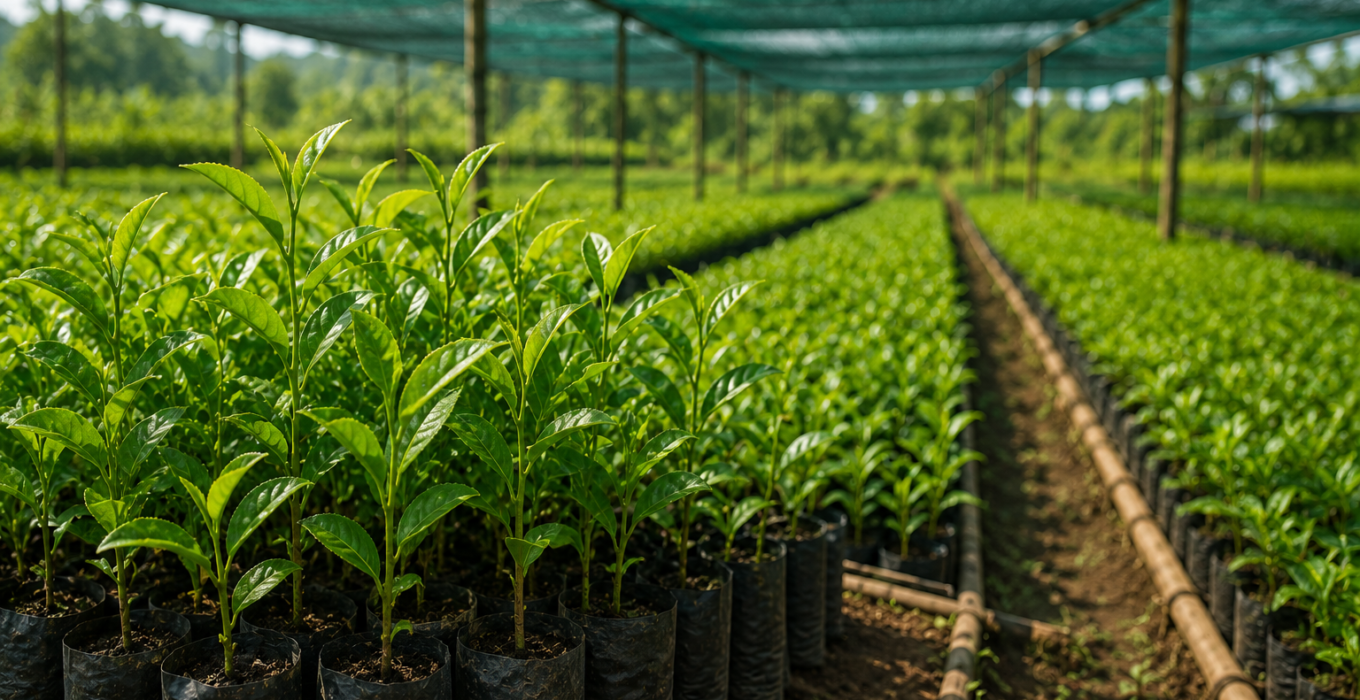
Shade nets and temporary shade cloth can help newly planted crops, seedlings, nurseries, and container plants survive intense heat better. IMD’s recent Agromet Advisories specifically mention installing shade nets for newly planted crops, and extension guidance from other universities also notes that shade cloth reduces crop temperature and water needs.

This is especially useful for young transplants, tea nursery material, vegetable seedlings, and balcony plants that dry out faster in hot weather.

4) Don’t feed or spray at the wrong time

High heat can make some sprays and nutrients harsher on plants. University of Maryland Extension advises avoiding fertilizer and pesticide applications when temperatures stay very high, because stress can increase the risk of phytotoxicity. That means the middle of a heat wave is usually not the best time for aggressive feeding or routine spraying.

The better practice is to apply foliar sprays, nutrients, or other inputs in the cooler parts of the day, only when needed, and only according to label directions. For a stressed crop, less forceful and more targeted action is usually safer than pushing hard with inputs.

5) Protect newly transplanted crops first

New transplants, young vegetable beds, and freshly planted orchards are the most vulnerable in summer heat. IMD advisories repeatedly emphasize drainage, irrigation management, and shade protection for standing crops and newly planted areas during adverse weather.

If you are planting in extreme heat, try to transplant in the evening, water immediately after planting, and keep the root zone shaded for the first few days. That small start can make the difference between survival and setback.

6) For pots and balcony gardens, check moisture much more often

Container plants heat up and dry out faster than field crops. Extension guidance on heat stress for container and garden plants says to check pots frequently, move them to a shadier spot if needed, and mulch the surface to reduce evaporation.

For hobby gardeners, that means watering early, using well-draining potting mix, and avoiding dark, heat-absorbing containers in full afternoon sun when possible.

7) Build resilience before the next heat wave

The best heat protection starts before the hot spell arrives. FAO and extension guidance both point to organic matter, mulch, better soil structure, and water-holding capacity as long-term defences against heat stress. In simple words, healthier soil handles summer better.

That is why heat protection is not only about emergency watering. It is also about making the soil more sponge-like, keeping it covered, and planning irrigation and nutrition ahead of time.

Where Biosar fits into this

Biosar’s product range is built around soil biology, biofertilizers, micronutrients, organic fertilizers, crop-special inputs, and support for tea, horticulture, and field crops. That means Biosar can fit naturally into a summer-heat plan by helping growers support the root zone, correct nutrient gaps, and keep plant nutrition more balanced while the crop is under stress.

Biosar’s biofertilizer category includes Azospirillum, Rhizobium, PSB, and KMB, while its micronutrient products include items such as zinc, boron, magnesium, calcium-magnesium-sulphur, and related nutrition inputs. For growers, that means there are options for building healthier soil and supporting nutrient balance, which is especially useful when heat makes crops more sensitive to stress.

A simple summer heat checklist

Before the hottest weeks arrive, try this:

      • Keep soil covered with mulch, crop residue, or compost,
      • Irrigate in cooler hours and more frequently if needed,
      • Use shade nets for new crops and seedlings,
      • Avoid strong fertilizer or pesticide applications during peak heat, and
      • Monitor pots, transplants, and young plants more closely than established ones.

Extreme summer heat does not have to ruin a season. The winning formula is simple: protect the soil, cool the root zone, water smartly, and avoid unnecessary stress on already stressed plants. For Indian farmers, tea gardens, and hobby growers alike, that is the most practical way to get through summer with less damage and better crop recovery.

TEA FLUSH CALSENDAR & SIMPLE NUTRION PLAN

Fertigation Basics

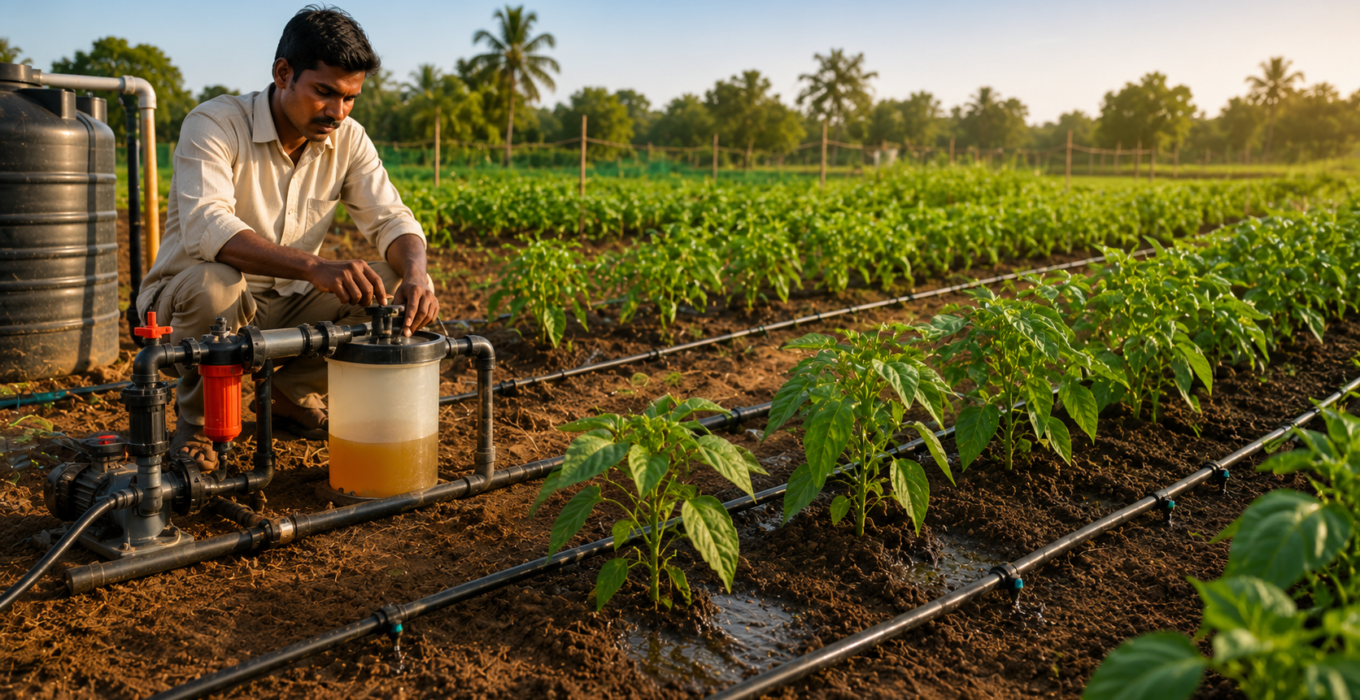
Fertigation means applying fertilizer through an irrigation system, so water and nutrients reach the root zone together. In drip or micro-irrigation systems, this is usually done with injectors or similar equipment that mix a soluble fertilizer solution into the irrigation water. It is especially useful when you want more precise nutrient delivery and better control over when the crop gets fed.

Why farmers use fertigation

The biggest advantage is control. Fertigation lets you place nutrients closer to the active root zone, time them more precisely, and reduce losses compared with blanket application. FAO and extension sources note that fertigation can improve water and nutrient use efficiency, reduce runoff and deep percolation, and lower labour needs when the system is designed and operated properly.

That is why fertigation is especially useful in drip-irrigated crops, water-stressed areas, and high-value crops such as vegetables, fruits, and plantation crops. Indian extension material also describes drip fertigation as useful for crops that need frequent nutrient and water supply near the roots.

What kind of fertilizers work best

Not every fertilizer is suitable for fertigation. The fertilizer must dissolve well in water, because undissolved particles can clog emitters and disturb the flow. Liquid fertilizers and fully water-soluble materials are generally the safest choices, and several extension sources stress the importance of solubility, purity, and compatibility.

In practice, fertigation is most often used for nitrogen, and it can also be used for phosphorus, potassium, calcium, magnesium, and soluble micronutrients when the crop and system allow it.

What you need before you start

A good fertigation setup usually needs a drip or other micro-irrigation system, a fertilizer injector, clean water, and a way to filter the water properly. Filtration matters a lot because clogging is one of the most common problems in drip systems. Water quality also matters, because dirty or chemically imbalanced water can damage the system and reduce nutrient delivery.

 A simple fertigation workflow

The beginner version is straightforward. First, choose a fertilizer that is clearly labelled as soluble or suitable for fertigation. Next, dissolve or mix it according to the label. Then run the irrigation system and inject the nutrient solution during the irrigation cycle so it reaches the root zone evenly. Finally, flush the system with clean water so no fertilizer remains in the lines or emitters. FAO guidance also notes that fertigation should be managed so nutrients are moved out of the system before irrigation ends.

 When fertigation is a better choice than soil application

Fertigation is often better when the crop needs frequent feeding, when water is limited, or when the goal is to use fertilizer more efficiently. Soil application is still the foundation for building long-term fertility, but fertigation gives you faster, more targeted delivery during active growth. That is why many growers use both methods together instead of choosing only one.

Common beginner mistakes

The most common mistakes are using the wrong fertilizer, skipping filtration, and letting the system clog. Another mistake is treating fertigation like a one-time shortcut instead of part of a planned crop-nutrition program. Extension sources also warn that water quality, fertilizer type, irrigation method, and economic feasibility all matter when deciding whether fertigation is the right fit.

 How Biosar fits into fertigation

For Biosar, fertigation makes sense wherever a product is water-soluble, liquid, or explicitly labeled for drip use. On Biosar’s site, some products already mention compatibility with drip irrigation systems or soil application via drip, such as Biosar B10.5 and Biosar Bena. Biosar also offers a wider range of biofertilizers and nutrient-management inputs, which can support a fertigation-style program when the product label allows it.

That matters because fertigation is not just about feeding a crop faster. It is about matching nutrition to plant demand, reducing waste, and using irrigation infrastructure more intelligently. For Indian farmers, tea gardens, and serious home growers, that can make nutrient management simpler and more precise.

 A simple rule to remember

If your fertilizer dissolves cleanly, your irrigation system is properly filtered, and your crop benefits from frequent small feedings, fertigation can be a very smart method. If your product is gritty, poorly soluble, or not approved for drip use, keep it out of the system.

Fertigation is one of the most practical ways to combine water and nutrient management. It works best when the system is clean, the fertilizer is suitable, and the crop really benefits from precise feeding. For beginners, the safest approach is simple: start with a small block, use only label-approved soluble inputs, and flush the system properly after feeding.

TEA FLUSH CALSENDAR & SIMPLE NUTRION PLAN

Foliar vs. Soil Application

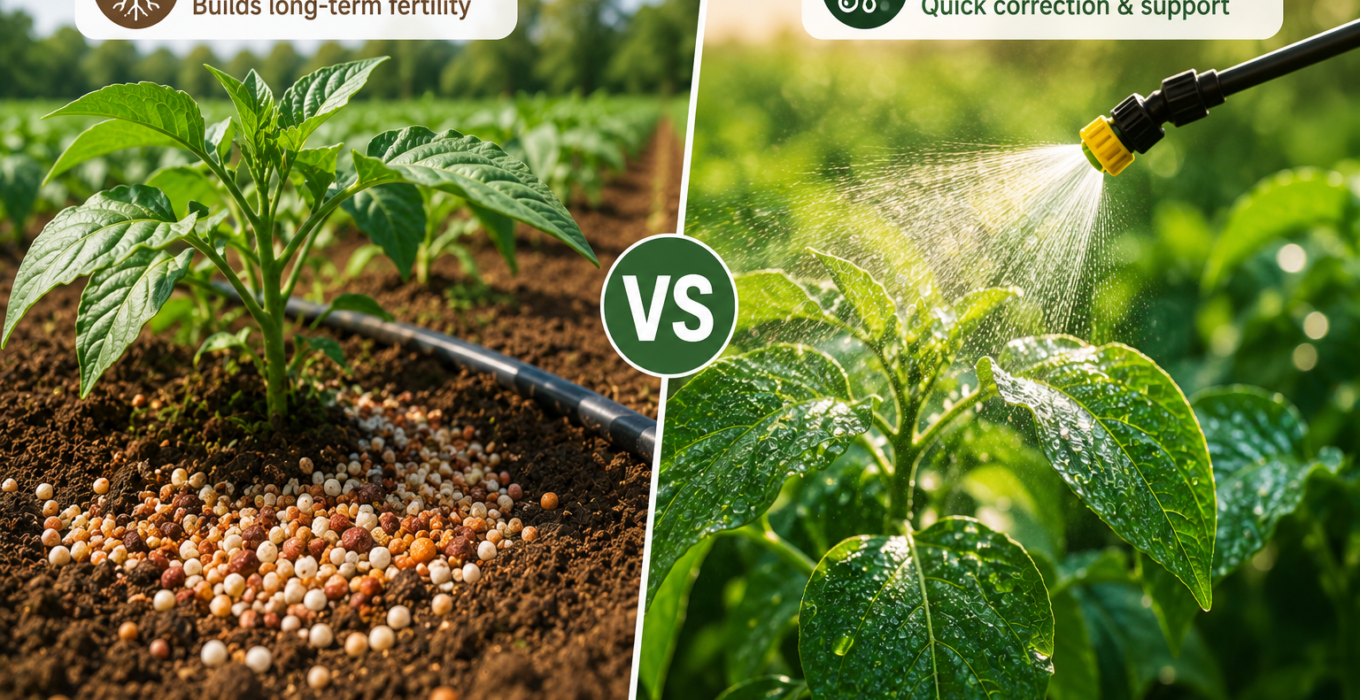
The short answer is: neither method is always better. The better method depends on what your crop needs, how fast it needs it, and what problem you are trying to solve. In most farming systems, soil application is the foundation, while foliar application is the quick helper. Foliar feeding can correct certain deficiencies quickly, but most nutrient uptake still happens through the roots.

What soil application does best

Soil application is the main way to build long-term fertility. It works best for base nutrients like nitrogen, phosphorus, and potassium, because these nutrients are normally managed in the root zone and absorbed through the soil. It is the standard method for keeping a crop nourished over time, especially when you want to build a healthy foundation before planting or during active growth.

Soil feeding is usually the better choice when:

      • You are preparing land before sowing or transplanting,
      • The crop needs a steady supply of nutrients,
      • You are dealing with large-field crops, or
      • You want to build soil fertility over the long run.
What foliar application does best

Foliar application means spraying nutrients directly on the leaves. It is useful when a crop needs a fast response, especially for micronutrient deficiencies or when root uptake is temporarily limited by weather, waterlogging, or poor soil conditions. FAO notes that foliar sprays are often used for micronutrients and sometimes urea, and that only water-soluble fertilizers that will not scorch leaves should be used.

Foliar feeding is usually the better choice when:

      • You need to correct a visible deficiency quickly,
      • Soil conditions are temporarily preventing nutrient uptake,
      • You are growing high-value fruits or vegetables, or
      • You want a targeted boost during a critical stage like flowering or fruit set.
Which crops benefit more from foliar feeding?

Foliar nutrition tends to be especially useful in fruit, vegetable, ornamental, and perennial crops where leaf testing and visual nutrient correction are common. University guidance notes that foliar testing is useful for fruit and vegetable crops because each crop has its own sampling needs and fertilizer requirements.

For some crops, foliar sprays are a strong support tool. For example, foliar iron sprays may help maintain plant health while soil pH is being corrected in acid-sensitive crops like blueberries and ornamentals.

When foliar feeding is not the main answer

Foliar fertilizers should not be treated as a default replacement for soil nutrition. In soybean, for example, University of Minnesota research found that routine prophylactic foliar fertilizer use did not improve yield and could reduce profitability when used without a visible nutrient deficiency. That is a good reminder that foliar products should be used for a reason, not just out of habit.

A simple rule by crop type

For field crops like wheat, maize, soybean, cotton, and rice:
Soil application is usually the main method. Foliar sprays can be added only when there is a clear deficiency or a specific agronomic need.

For vegetables and fruits:
Use soil feeding as the base, then use foliar sprays to correct micronutrient deficiencies or support growth during key stages.

For tea, plantation crops, and perennials:
Soil feeding builds the long-term base, while foliar sprays can help during periods of active growth or when rapid correction is needed.

For home gardens and potted plants:
Soil mix, compost, and slow-release feeding do most of the work. Foliar feeding can be a helpful extra tool, especially for micronutrients, but it should stay light and controlled.

The easiest way to decide

Ask these three questions :

      1. Do I need long-term feeding or a quick fix?
        Long-term feeding usually means soil. Quick fix usually means foliar.
      2. Is the problem in the soil or visible in the leaves?
        Soil issues usually need soil correction. Leaf symptoms may justify a foliar spray if the nutrient can be absorbed that way.
      3. Is my crop high-value and sensitive enough to justify foliar correction?
        If yes, foliar feeding can be useful. If not, soil feeding is often simpler and more economical.

For most crops, soil application is the main method and foliar application is the support method. Soil builds the crop. Foliar rescues it when needed. Used together, they can give you a stronger and more efficient nutrition plan.

TEA FLUSH CALSENDAR & SIMPLE NUTRION PLAN

Phosphates Without the DAP

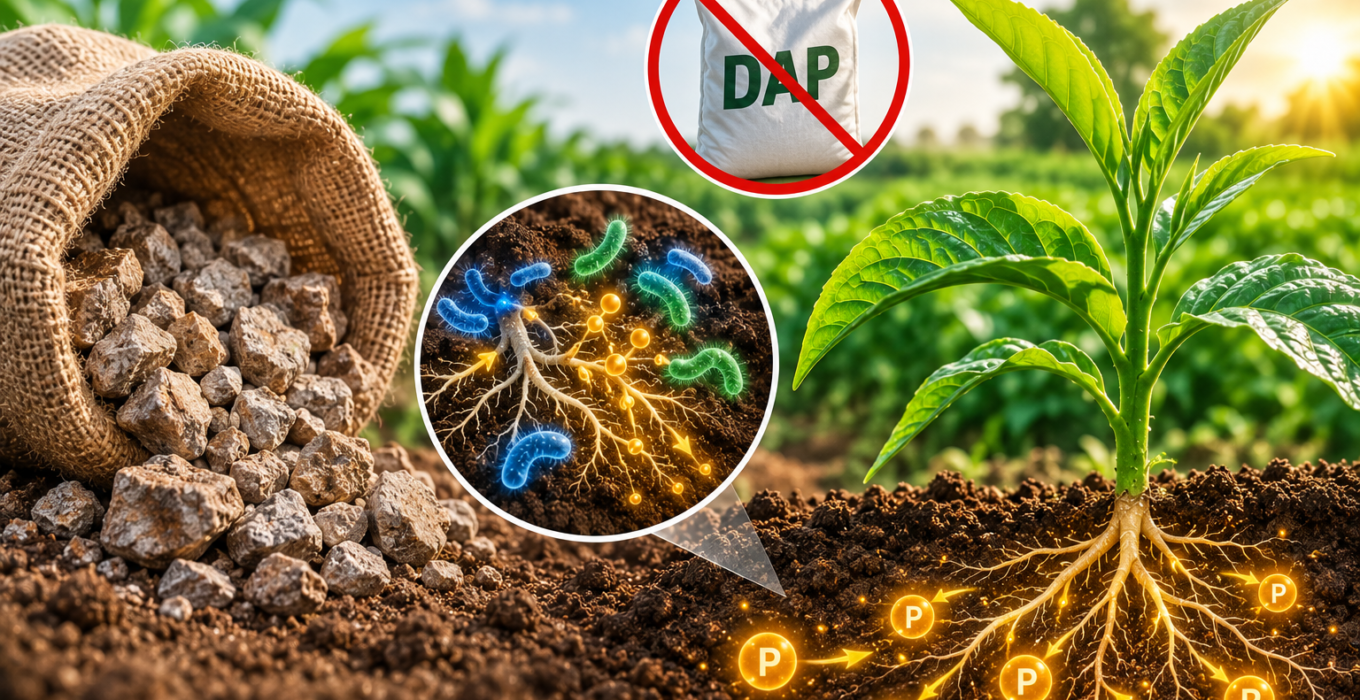
Biosar Sampoorna is presented on Biosar’s site as a phosphate-rich organic manure made by co-composting rock phosphate with organic matter to improve crop nutrition and soil health. In other words, it is designed to support phosphorus supply through a more biological, soil-building route rather than relying only on conventional chemical phosphate fertilizers.

What rock phosphate does

Rock phosphate is a natural mineral source of phosphorus, but on its own it is not always immediately available to plants. In many soils, phosphorus can become fixed in forms plants cannot easily use, especially in acidic or alkaline conditions. That is why farmers often do not get full benefit from raw rock phosphate unless it is processed, composted, or paired with helpful microbes.

Where the bacteria come in

This is where phosphate-solubilizing bacteria (PSB) matter. Research shows PSB can improve the agronomic efficiency of rock phosphate by releasing phosphorus into forms that plants can absorb more easily. Studies also note that PSB can enhance the use efficiency of both mineral phosphorus fertilizers and rock phosphate, especially when integrated into a well-designed crop nutrition system.

In practical terms, the bacteria act like tiny helpers in the rhizosphere: they produce organic acids and other compounds that help unlock fixed phosphorus in the soil. That means a product like Sampoorna is not just about adding phosphorus; it is about helping the soil biology make phosphorus more available over time.

How this compares with DAP and SSP

DAP and SSP are standard chemical phosphorus fertilizers used widely in Indian farming. They deliver phosphorus quickly, but they are still mineral fertilizers with a direct input cost and, in many soils, a risk of phosphorus fixation if conditions are not favourable. Research comparing SSP, rock phosphate, and PSB has shown that combining sources and microbes can improve available phosphorus and uptake in crops like paddy, especially when part of an integrated phosphorus strategy.

That is why Biosar Sampoorna is best understood as an alternative phosphorus strategy, not simply a one-to-one chemical substitute. It may be especially useful where the goal is to build soil health, reduce dependence on straight chemical inputs, and improve phosphorus availability through composting and microbial action.

Why farmers might care

For farmers, the practical appeal is simple: a product like Sampoorna may offer a more cost-effective and soil-friendly way to manage phosphorus, especially when the crop system benefits from organic matter and biological activity. Studies show that combining rock phosphate with PSB can improve phosphorus release and crop response, which is the scientific basis for why these products are used in sustainable farming programs.

This can matter in crops where soil health, long-term fertility, and input efficiency are important. Biosar also positions its product line around organic fertilizers and nutrient-management solutions, so Sampoorna fits neatly into a broader soil-first approach rather than a single-application mindset.

The simple takeaway

Biosar Sampoorna uses rock phosphate + organic matter + beneficial bacteria to make phosphorus more usable by plants. The idea is not to magically eliminate all chemical phosphorus needs in every situation, but to provide a natural, biologically active route that can reduce reliance on DAP or SSP in suitable systems.

TEA FLUSH CALSENDAR & SIMPLE NUTRION PLAN

N-P-K the Bio Way

Biosar describes its NPK biofertilizer as a microbial product built around Azotobacter, phosphate-solubilizing bacteria (PSB), and potassium-mobilizing bacteria (KMB), with the goal of improving nitrogen, phosphorus, and potash availability in a natural way. On Biosar’s site, this product is presented as part of a broader microbial crop-nutrition approach rather than a plain chemical fertilizer replacement.

What the microbes actually do

Azotobacter is a free-living nitrogen-fixing bacterium. In simple terms, it can convert atmospheric nitrogen into ammonia, which plants can then use through the soil system. That is why it is useful in crop nutrition, especially as part of a wider soil-health program.

PSB stands for phosphate-solubilizing bacteria. These microbes help convert insoluble phosphorus in the soil into forms plants can absorb more easily. That matters because a lot of phosphorus in soil is present, but not all of it is immediately available to crops.

KMB stands for potassium-mobilizing bacteria. These bacteria help release fixed potassium from soil minerals and make it more available for plant uptake. In simple words, they help unlock a nutrient that is already in the soil, but not always in a plant-friendly form.

Where Rhizobium fits in

Rhizobium is another famous nitrogen-fixing bacterium, but it works differently from Azotobacter. Rhizobium usually fixes nitrogen inside root nodules of legume plants, so it depends on a host plant relationship. Azotobacter, by contrast, is free-living in soil. That is why Rhizobium is a useful comparison point, but it is not the same thing as Azotobacter.

Why this matters for crops

The real value of a microbial NPK product is that it does not just “feed” the plant once. It helps improve the soil’s nutrient availability over time by using living biology to release nutrients already present in the farm system. That can support better root growth, more efficient nutrient use, and healthier soil activity when used correctly.

 Why this fits Biosar

This is where Biosar’s brand direction makes sense. Its product messaging consistently points toward biofertilizers, microbial nutrition, and soil improvement, not just one-off feeding. For Indian farmers, tea gardens, and even hobby growers, that matters because it supports a more soil-first approach: feed the biology, and the biology helps feed the crop.

An important point

These microbes are helpful, but they are not magic. They work best as part of a wider soil program that includes good moisture, organic matter, and sensible nutrient management. So, the right way to think about Biosar NPK is as a living support system for fertility, not as a shortcut that replaces all agronomy.

Biosar NPK uses beneficial microbes to make nitrogen, phosphorus, and potassium more available to plants by working with the soil’s biology instead of relying only on synthetic feeding.

TEA FLUSH CALSENDAR & SIMPLE NUTRION PLAN

The IMO Certification Difference

In simple terms, IMO-certified means a farm, processor, or product has been inspected and certified by IMO Control for organic or sustainable-agriculture standards. In India, IMO Control Pvt. Ltd. (IMO India) describes itself as an independent certification body for organic and sustainable agriculture, and APEDA lists it among India’s accredited organic certification bodies under the NPOP system.

That certification matters because export buyers do not just want natural or chemical-free claims. They want proof. For organic goods, that proof usually means documented farming practices, traceability, inspections, and the right certificate for the target market. The USDA says organic production is protected by law and must meet its standards, while EU rules require organic imports to be backed by a certificate from a recognized control authority or control body.

For Indian exporters, this is even more important because APEDA’s TraceNet system is the official process-certification and traceability platform for organic exports from India. APEDA says TraceNet supports forward and backward traceability and quality assurance for products that comply with NPOP standards. In practice, that means IMO certification is not just a label; it is part of the paperwork and traceability chain that helps the crop move through export channels.

Why this helps farmers

The biggest benefit is market access. APEDA states that Indian organic products certified by accredited certification bodies are accepted by importing countries. That opens doors to premium markets where buyers are willing to pay more for verified organic produce, especially when the product can be traced all the way back to the farm.

It also helps with buyer confidence. A buyer in the EU or U.S. is more likely to place an order when the product comes with recognized certification and export documents. For the U.S., USDA says each shipment needs an NOP Import Certificate issued by an accredited certifier. For the EU, organic imports need the appropriate certificate from a recognized control body.

For Indian exporters, the documentation chain is especially important because organic exports typically need a Transaction Certificate under NPOP/TraceNet. PIB notes that a product may be exported as organic only when accompanied by a Transaction Certificate issued by an accredited certification body, and APEDA has separate transaction-certificate formats for the EU, Switzerland, the U.S., and other destinations.

Why premium international markets care so much

Premium markets usually care about three things: how the crop was grown, whether it can be traced, and whether it meets the importing country’s standards. That is why certification bodies, import certificates, and traceability systems matter so much. The EU’s organic import rules and the USDA’s import certificate requirements are designed to keep that chain auditable.

In some markets, there are even extra private standards on top of the legal organic rules. For example, Swiss organic trade can require Bio Suisse compliance for that market, and equivalent organic certification is the basis for that route. So certification can help a farmer not just enter export markets, but enter the more valuable ones where branding and buyer trust are stronger.

Summary

If a product is IMO-certified, it means the crop or operation has been independently checked against recognized organic standards. For a farmer, that can mean:

      • Easier access to export channels,
      • Stronger buyer trust,
      • Better traceability, and a
      • Better chance of reaching premium international buyers.
TEA FLUSH CALSENDAR & SIMPLE NUTRION PLAN

Carbon-Neutral Farming

Biosar had its manufacturing facility was validated by RINA S.p.A. and registered under a United Nations carbon-reduction initiative. That matters because, in agriculture, credibility is becoming as important as claims. Buyers, farmers, and partners are increasingly asking not just whether a product works, but whether the company behind it is building for long-term soil health, lower emissions, and traceable sustainability.

The “UN” part is important because it points to a globally recognized climate framework, not just a private marketing label. The official UNFCCC CDM registry is the UN platform used for voluntary cancellation of Certified Emission Reductions, and it was built to provide a transparent way to offset carbon footprints. In other words, an UN-linked carbon-reduction status signals that climate claims are tied to an established international process.

For Indian agriculture, this matters now more than ever. India has already notified the Carbon Credit Trading Scheme, 2023, which lays the groundwork for a national carbon market, and the Ministry of Agriculture has also published a framework for a voluntary carbon market in agriculture. That means the direction of travel is clear: carbon accounting, climate-friendly production, and verifiable environmental performance are becoming part of mainstream agriculture.

 Why this is relevant to farmers

For farmers, a company that takes carbon reduction seriously usually also takes soil health seriously. Biosar’s own product pages emphasize bio-fertilisers, organic manure, microbial inputs, and soil-conditioning products that are designed to improve nutrient availability and support healthier soils. That fits the broader shift toward farming systems that build soil carbon, improve water retention, and reduce dependence on harsh inputs.

That is especially relevant in a country like India, where agriculture faces pressure from rising input costs, weather variability, and soil fatigue. A company that is already thinking in climate terms is more likely to design products and support systems that help growers save water, strengthen roots, and reduce waste over time.

Why this matters for tea gardens and plantation crops

This is also meaningful for tea gardens, where long-term soil condition and plantation management matter as much as seasonal output. Biosar’s product pages specifically mention compatibility with tea and other plantation crops for some of its bio-inputs, which makes the climate and soil-health angle more practical, not just symbolic. A climate-aware supplier is better positioned to support plantation customers who need consistency, soil resilience, and lower-risk input choices.

Why it matters for hobby gardeners too

Even for hobby gardeners, the value is real. A company that is thinking about emissions and soil health is usually also thinking about cleaner formulations, better composting logic, and more responsible growing practices. That matters to people who want to grow herbs, vegetables, flowers, or tea plants at home without relying on heavy chemical use.

What it means for the future

In the future, agriculture will not be judged only by yield. It will also be judged by :

      • How much soil it builds,
      • How much water it saves,
      • How traceable its inputs are, and
      • Whether it can prove climate performance.

That is why Biosar’s UN-linked carbon-reduction status matters. It suggests the brand is not only selling inputs, but also aligning itself with where agriculture is headed: lower-emission production, better soil stewardship, and more accountable farming systems.

For Indian agriculture, carbon credibility is becoming a business advantage, not just an environmental bonus. If Biosar’s carbon-reduction status is correctly documented and communicated, it can help the brand stand for something bigger than products alone: cleaner soil, smarter inputs, and a more climate-ready future for farms, tea gardens, and home growers alike.

TEA FLUSH CALSENDAR & SIMPLE NUTRION PLAN

What regenerative farming means in simple words

Regenerative farming means farming in a way that improves the land instead of slowly exhausting it.

In simple words, it is about helping the soil become healthier, stronger, and more alive over time so the farm can keep producing well for many years.

Every farm depends on soil. If the soil becomes tired, compacted, dry, or low in organic matter, crops struggle. Regenerative farming tries to fix that by working with nature instead of against it.

It focuses on things like :

  • Keeping the soil covered
  • Adding compost or other organic matter
  • Growing different crops instead of the same crop again and again
  • Reducing unnecessary tilling
  • Protecting earthworms, microbes, and other helpful life in the soil
  • Using water more wisely

Why it matters

Healthy soil does more than hold plants in place. It helps roots grow better, holds moisture for longer, and supports stronger crops. It can also make farms more resilient during heat, dry spells, and sudden weather changes.

That is why many farmers, gardeners, and plantation growers are now paying more attention to soil health. They are not just trying to get one good harvest. They are trying to build a farm that stays productive in the long run.

Think of it like this :

Conventional farming often asks, “How much can I take from this land?”

Regenerative farming asks, “How do I leave this land better than before?”

That is the idea.

What regenerative farming looks like in practice

A regenerative farm may :

    • Use mulch to protect the soil
    • Grow cover crops between main crops
    • Rotate crops to avoid overusing the same patch of land
    • Add natural inputs like compost, vermicompost, or manure
    • Avoid leaving the soil bare
    • Manage pests in a smarter, more balanced way

Many farmers already use some of them without calling it regenerative farming.

Why beginners like this idea

One reason regenerative farming is becoming popular is that it feels practical. It does not ask farmers to ignore the land’s condition. It asks them to notice it more carefully.

For a small farmer, that can mean :

• Less wasted water
• Better soil structure
• Fewer problems caused by poor soil
• More stable growth over time

For a hobby gardener, it can mean :

• Healthier potting mix
• Better plant growth
• Less need for harsh inputs
• A more natural way to grow food and flowers

How Biosar fits into this idea

At Biosar, this approach makes a lot of sense because we serve people who want to grow in a more thoughtful, practical way, whether that is a farmer managing a field, a tea garden looking for healthier soil routines, or a hobby gardener trying to grow herbs and vegetables at home. Regenerative farming matches the kind of growing Biosar can support: simple inputs, better soil habits, and clear guidance that helps plants and soil work together. That is why Biosar’s product range and content can naturally support soil-building practices, steady plant nutrition, and easier decision-making for growers of all kinds.

Imagine two plots.

In the first one, the soil is left bare after harvest, tilled heavily, and fed only when the crop looks weak. Over time, the soil may become hard and less productive.

In the second one, the farmer adds compost, keeps the soil covered with mulch, rotates crops, and avoids disturbing the soil too much. Over time, that soil usually becomes softer, richer, and easier to work with.

That second approach is much closer to regenerative farming.

Is it the same as organic farming?

Not exactly.

Organic farming mainly focuses on avoiding synthetic chemicals and using approved natural inputs. Regenerative farming is broader. It focuses on rebuilding soil health and improving the whole system.

The two ideas often overlap, but they are not identical.

The main goal

The main goal of regenerative farming is simple :
1. Leave the land healthier than you found it.
2. That means farms can stay productive, soil can improve instead of decline, and growers can build something more stable for the future.

Regenerative farming is not a fancy trend.

At its core : Care for the Soil, and the Soil will Care for the Crop.

For farmers, tea gardens, and home growers alike, that idea is easy to understand and worth paying attention to.

TEA FLUSH CALSENDAR & SIMPLE NUTRION PLAN

How to re-pot a plant without killing it

Repotting is supposed to help a plant, not shock it. The trick is to move it gently, give it the right soil, and avoid disturbing the roots more than necessary. Most plants survive repotting well when you keep the process calm and simple.

When a plant needs repotting

A plant usually needs a bigger pot when:

      • Roots are circling the bottom
      • Water runs through too fast
      • The plant dries out very quickly
      • Growth has slowed even though care is fine
      • The plant looks top-heavy and keeps falling over
 The optimal time

The best time to repot is when the plant is actively growing. For many houseplants, that means spring or early warm weather. Try not to re-pot a stressed plant, a flowering plant, or one that is already struggling badly unless it really needs rescue.

Choose a pot that is only slightly bigger

Do not jump to a huge pot. Use one that is just one size larger than the current pot. A pot that is too large can hold too much water and cause root rot.

Make sure the new pot has drainage holes.

 Use fresh & Suitable soil

Do not use heavy garden soil in pots. Use a light potting mix that drains well. If the plant likes dry conditions, like succulents, use a mix made for that type of plant. If it likes moisture, use a richer but still airy mix.

 Water the plant lightly before repotting

Watering a little before repotting helps the roots and soil hold together better. Do not soak it completely. You just want the root ball to be easier to remove.

 Remove the plant gently

Turn the pot on its side and slide the plant out slowly. If it is stuck, tap the sides of the pot instead of pulling hard on the stem.

Try to keep the root ball intact as much as possible.

 Look at the roots

Healthy roots are usually firm and light-coloured. If you see black, mushy, or rotten roots, trim those off with clean scissors. If the roots are tightly wrapped around the root ball, loosen them a little with your fingers so they can spread into the new soil.

 Place it in the new pot

Add a little fresh soil to the bottom of the new pot first. Put the plant in so it sits at the same depth as before. Do not bury the stem too deeply.

Fill around the sides with fresh soil and press lightly so there are no big air gaps, but do not pack the soil hard.


Water after repotting

Water gently after repotting so the soil settles around the roots. Let excess water drain away completely.

After that, do not keep watering every day. Overwatering is one of the fastest ways to damage a newly re-potted plant.

Give it recovery time

For a few days, keep the plant in bright but indirect light if possible. Avoid strong sun, heavy feeding, or moving it around too much.

A plant may look a little tired for a short while after repotting. That is normal. What you want to avoid is sudden collapse, yellowing from too much water, or root rot from poor drainage.

Common mistakes to avoid

The biggest mistakes are:

      • Using a pot that is too big
      • Tearing the roots too much
      • Using the wrong soil
      • Burying the stem too deep
      • Watering too much after repotting
      • Repotting a plant that did not need it yet
Simple rules to remember
        • Bigger pot, but not too big.
        • Fresh soil, but not heavy soil.

Gentle handling, not rough pulling.