
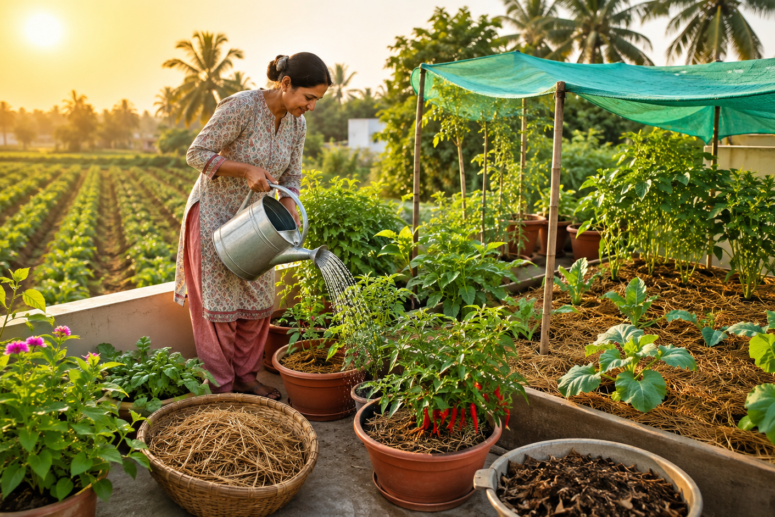
Summer is the season when plants can go downhill fast. Heat increases evaporation from the soil, dries out pots quickly, and puts extra stress on roots and leaves. Extension guidance consistently says the best summer strategy is simple: water smartly, keep the soil covered, and reduce direct heat exposure when possible.
1) Water early, and water deeply
The best time to water is usually early morning, when temperatures are cooler and less water is lost to evaporation. Extension sources also recommend deep watering rather than small, frequent splashes, because shallow watering encourages shallow roots and makes plants more vulnerable to heat and drought.
For container plants, the rule is a little stricter. Pots dry out much faster than garden beds, so they may need water in the early morning and again in the evening during heatwaves. It is also important to soak the pot until water comes out of the bottom, because dry potting mix can let water run down the edges without reaching the roots.
2) Mulch everything you can
Mulch is one of the easiest summer fixes. It helps reduce evaporation, keeps the soil cooler, and slows down weed growth. Extension guidance recommends organic mulches such as straw, compost, shredded leaves, or decomposed manure, usually in a layer about 2 to 4 inches deep.
Just do not pile mulch against the stem or trunk. Extension advice warns that mulch placed directly against crowns or stems can cause rot.
3) Give sensitive plants some shade
When heat gets extreme, shade cloth can help a lot. Iowa State Extension recommends starting with about 30 to 50 percent shade cloth for many plants, while other extension sources advise moving potted plants to a shadier spot during heat waves.
This matters especially for seedlings, newly transplanted crops, and container plants, which are more vulnerable to heat stress. Shade should sit above the plant, not directly on top of leaves, so it does not trap heat or cause leaf burn.
4) Check containers often
If you grow in pots, summer care has to be more active. Container plants heat up and dry out quickly, so extension advice says to check them frequently, move them if needed, and test moisture with your finger or a moisture meter. Smaller pots dry out faster than larger ones.
A pot that feels very light usually needs water. If the mix is completely dried out, water may run down the side of the container instead of soaking in properly, so slow watering is better than a quick splash.
5) Do not push stressed plants too hard
When a plant is already struggling in high heat, heavy feeding or harsh sprays can make things worse. Extension guidance warns that fertilizer and pesticide applications should be handled carefully during heat stress because plants are already under pressure.
That does not mean stop all care. It means use gentle, targeted support and avoid overdoing inputs during the hottest part of the day.
6) Keep soil healthier before the heat arrives
The best summer defence starts earlier in the season. Soils with more organic matter hold moisture better and cope better with hot weather. FAO notes that improving soil moisture retention and protecting the soil surface are key ways to reduce water stress.
That means compost, mulch, and regular soil care are not extras. They are the foundation of summer survival.
7) For field crops, protect the root zone first
For crops in the ground, the root zone matters more than anything else. Deep, well-timed watering, mulch, and shade protection for young transplants can make a big difference. IMD agromet advisories specifically recommend light and frequent irrigation for crops such as vegetables, groundnut, onion, sunflower, sesame, fodder crops, orchards, and green gram during heat conditions.
How Biosar fits into summer plant care
This is where Biosar fits naturally. Biosar’s product range includes biofertilizers, organic fertilizers, micronutrients, soil conditioners, and growth promoters, which can support healthier root zones and steadier plant nutrition during stressful weather. Biosar also carries products such as Biosar HIRA, Biosar Power, Biosar CAMS, and Biosar NPK, which are aimed at soil health, nutrient availability, and better plant performance.
For summer care, that matters because stressed plants do better when the soil is in good shape and nutrient supply is balanced rather than pushed too hard. Products designed for soil conditioning and microbial support can fit into a summer strategy that focuses on resilience, not just quick growth.
Simple summer survival checklist
A good summer routine looks like this: water early, mulch well, shade sensitive plants, check pots often, and avoid unnecessary stress. Those five steps are the easiest way to keep plants alive when temperatures climb.
Summer does not have to wipe out your garden. If you protect the roots, keep the soil covered, and water in a way that reaches the plant instead of the air, most plants can make it through the heat much better. For both hobby gardeners and farmers, the goal is not just survival for one hot week, it is keeping the plant strong enough to recover and keep growing.