
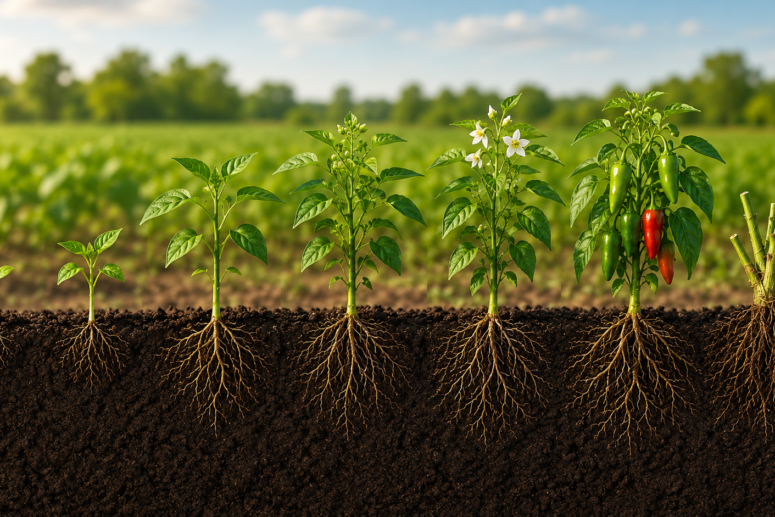
Choosing fertiliser is not just about feeding the plant. It is about feeding the plant at the right time. A crop does not need the same thing every week. A young seedling needs help building roots. A leafy plant needs stronger vegetative growth. A flowering or fruiting crop needs a different nutrient balance to support buds, flowers, pods, fruits, or grains.
That is why the best fertiliser depends on the stage of the crop.
1) Seedling stage
When a crop is just starting, the priority is strong roots and healthy early growth. At this stage, too much fertiliser can burn tender roots or push weak, leggy growth.
For seedlings, the soil or potting mix should be light, well-drained, and rich enough to support early establishment. If you use fertiliser, keep it mild and balanced. Organic compost, well-decomposed FYM, vermicompost, or a gentle starter nutrient is usually better than heavy feeding.
Best idea at this stage:
Use a light base mix and avoid overfeeding.
2) Vegetative stage
This is the stage when the plant is building size. Leaves, stems, and branches are developing fast. During this period, crops usually need more nitrogen compared to other stages because nitrogen supports green growth.
This is when a balanced fertiliser with a slightly higher nitrogen content can help. For field crops, vegetable crops, and many leafy crops, this is an important stage for timely feeding. For pots and home gardens, a mild liquid feed or compost-based nutrient can work well.
Best idea at this stage:
Choose a fertiliser that encourages healthy leaf and stem growth without making the plant soft or weak.
3) Pre-flowering stage
Before flowering begins, the plant starts changing its energy from leaf growth to reproductive growth. At this stage, you do not want to keep pushing only leaves.
A balanced fertiliser is often better here. Some crops may also benefit from nutrients like phosphorus and potassium, which help with flower development and stronger plant function. If the plant is too lush and leafy, reducing nitrogen a little can help it prepare for flowering better.
Best idea at this stage:
Move toward balanced feeding instead of strong nitrogen-heavy feeding.
4) Flowering stage
Once the crop starts flowering, the fertiliser focus changes again. The plant now needs support for flower retention, fruit setting, and overall reproductive success.
At this stage, too much nitrogen can sometimes encourage leafy growth at the expense of flowers. A more balanced fertiliser with better phosphorus and potassium support is often preferred. For many crops, micronutrients also matter here, especially if flowering is weak or uneven.
Best idea at this stage:
Use a fertiliser that supports flowers, not just leaves.
5) Fruiting or pod stage
For crops that produce fruits, pods, grains, or tubers, the next job is to help those parts develop properly. This is where potassium becomes especially important in many crops, because it supports overall plant strength, fruit quality, and filling.
At this stage, the plant should not be forced into excess leafy growth. Feeding should support the crop that is already forming. This is also a good time to watch for calcium, magnesium, and micronutrient needs if the crop shows stress.
Best idea at this stage:
Choose fertiliser that supports crop filling and quality.
6) Harvest and post-harvest stage : help recovery
After harvest, the plant or soil may need recovery support. In perennial crops like tea, fruit trees, or other long-term plants, this stage matters a lot. The goal is to rebuild the plant’s reserves and prepare it for the next cycle.
Organic matter, compost, and soil-building inputs are useful here. For annual crops, post-harvest soil care is equally important because the next crop depends on the soil left behind.
Best idea at this stage :
Feed the soil, not just the crop.
The biggest mistake beginners make
The most common mistake is using the same fertiliser all the time. A strong fertiliser is not always better. In fact, the wrong fertiliser at the wrong stage can reduce flowering, damage roots, or make the plant look green but unproductive.
Another common mistake is feeding without knowing the soil condition. A soil test, even a basic one, helps you understand what is already available and what is missing.
What works best for most people
For farmers, tea gardens, and serious growers, the best approach is simple:
-
-
- Start with a soil test if possible
- Match fertiliser to the crop stage
- Use balanced feeding instead of forcing one nutrient all the time
- Adjust based on crop type, weather, and plant response
-
For hobby gardeners, the same rule applies in smaller doses. Young plants need gentle care. Leafy growth needs support. Flowers and fruits need a different balance.
The right fertiliser is not the one with the biggest number on the packet. It is the one that matches the crop’s stage and the crop’s goal.
If you feed the plant according to its stage, you save money, reduce waste, and give your crop a much better chance to perform well.