
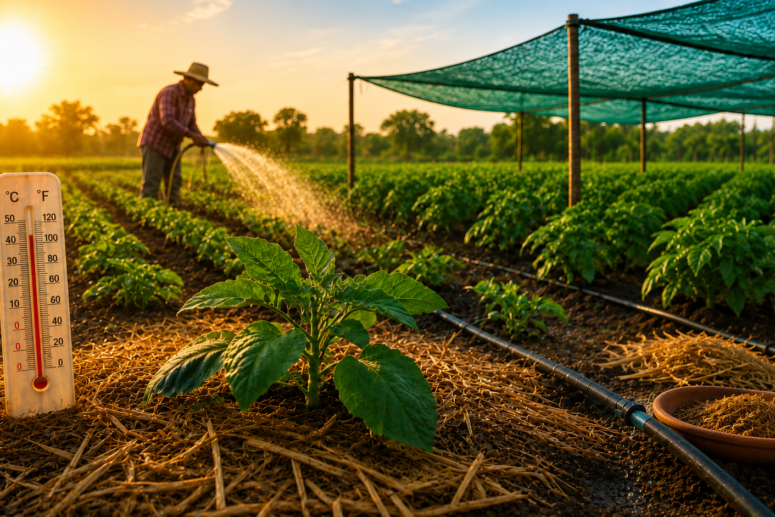
Extreme summer heat can hit crops fast. In April 2026, the India Meteorological Department warned that heat-wave conditions were likely in parts of northwest, central, and adjoining east India, which is a strong reminder that farmers need a heat plan before the damage begins.
Heat stress matters because high temperatures increase crop water loss, raise soil evaporation, and can disturb growth just when plants need stability most. FAO guidance on water stress and land management notes that protecting the soil surface and improving moisture retention are key ways to reduce heat-related stress.
1) Keep the soil covered
One of the simplest and most effective summer heat protections is mulch. FAO notes that mulching reduces soil evaporation and helps improve the micro-climate around crops, while Indian heat advisories from IMD specifically recommend straw mulch in vegetables and orchard crops to reduce evaporation.
For farmers, this means using straw, crop residue, compost, or other safe organic mulch around the root zone. For home gardeners, even a light mulch layer in pots can help the soil stay cooler for longer.
2) Water more wisely, not just more often
During hot spells, irrigation timing matters as much as irrigation amount. IMD’s agromet advisories recommend light and frequent irrigation for crops such as vegetables, groundnut, onion, sunflower, sesame, fodder crops, orchards, and green gram, and they advise doing this during cooler hours.
FAO guidance on crop water requirements also emphasizes that irrigation scheduling should match crop demand, because water stress grows quickly when evaporation is high. In practical terms, early morning and evening watering is usually safer than watering in peak afternoon heat.
3) Use shade where crops are most exposed
Shade nets and temporary shade cloth can help newly planted crops, seedlings, nurseries, and container plants survive intense heat better. IMD’s recent Agromet Advisories specifically mention installing shade nets for newly planted crops, and extension guidance from other universities also notes that shade cloth reduces crop temperature and water needs.
This is especially useful for young transplants, tea nursery material, vegetable seedlings, and balcony plants that dry out faster in hot weather.
4) Don’t feed or spray at the wrong time
High heat can make some sprays and nutrients harsher on plants. University of Maryland Extension advises avoiding fertilizer and pesticide applications when temperatures stay very high, because stress can increase the risk of phytotoxicity. That means the middle of a heat wave is usually not the best time for aggressive feeding or routine spraying.
The better practice is to apply foliar sprays, nutrients, or other inputs in the cooler parts of the day, only when needed, and only according to label directions. For a stressed crop, less forceful and more targeted action is usually safer than pushing hard with inputs.
5) Protect newly transplanted crops first
New transplants, young vegetable beds, and freshly planted orchards are the most vulnerable in summer heat. IMD advisories repeatedly emphasize drainage, irrigation management, and shade protection for standing crops and newly planted areas during adverse weather.
If you are planting in extreme heat, try to transplant in the evening, water immediately after planting, and keep the root zone shaded for the first few days. That small start can make the difference between survival and setback.
6) For pots and balcony gardens, check moisture much more often
Container plants heat up and dry out faster than field crops. Extension guidance on heat stress for container and garden plants says to check pots frequently, move them to a shadier spot if needed, and mulch the surface to reduce evaporation.
For hobby gardeners, that means watering early, using well-draining potting mix, and avoiding dark, heat-absorbing containers in full afternoon sun when possible.
7) Build resilience before the next heat wave
The best heat protection starts before the hot spell arrives. FAO and extension guidance both point to organic matter, mulch, better soil structure, and water-holding capacity as long-term defences against heat stress. In simple words, healthier soil handles summer better.
That is why heat protection is not only about emergency watering. It is also about making the soil more sponge-like, keeping it covered, and planning irrigation and nutrition ahead of time.
Where Biosar fits into this
Biosar’s product range is built around soil biology, biofertilizers, micronutrients, organic fertilizers, crop-special inputs, and support for tea, horticulture, and field crops. That means Biosar can fit naturally into a summer-heat plan by helping growers support the root zone, correct nutrient gaps, and keep plant nutrition more balanced while the crop is under stress.
Biosar’s biofertilizer category includes Azospirillum, Rhizobium, PSB, and KMB, while its micronutrient products include items such as zinc, boron, magnesium, calcium-magnesium-sulphur, and related nutrition inputs. For growers, that means there are options for building healthier soil and supporting nutrient balance, which is especially useful when heat makes crops more sensitive to stress.
A simple summer heat checklist
Before the hottest weeks arrive, try this:
-
-
- Keep soil covered with mulch, crop residue, or compost,
- Irrigate in cooler hours and more frequently if needed,
- Use shade nets for new crops and seedlings,
- Avoid strong fertilizer or pesticide applications during peak heat, and
- Monitor pots, transplants, and young plants more closely than established ones.
-
Extreme summer heat does not have to ruin a season. The winning formula is simple: protect the soil, cool the root zone, water smartly, and avoid unnecessary stress on already stressed plants. For Indian farmers, tea gardens, and hobby growers alike, that is the most practical way to get through summer with less damage and better crop recovery.