
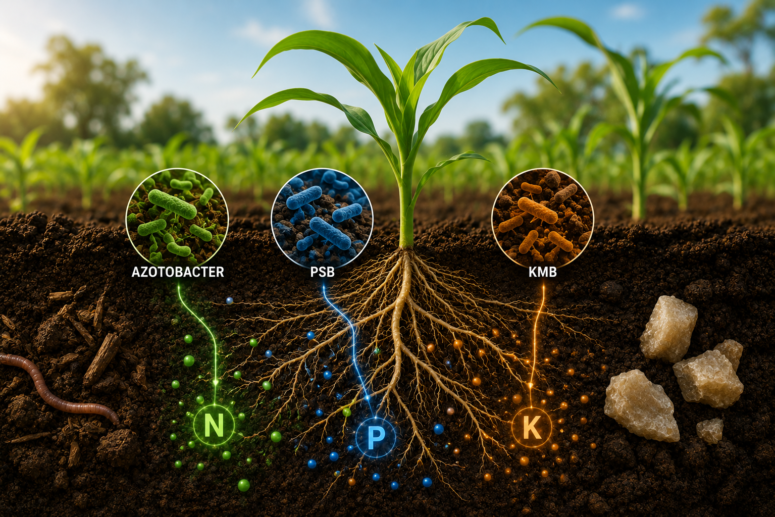
Biosar describes its NPK biofertilizer as a microbial product built around Azotobacter, phosphate-solubilizing bacteria (PSB), and potassium-mobilizing bacteria (KMB), with the goal of improving nitrogen, phosphorus, and potash availability in a natural way. On Biosar’s site, this product is presented as part of a broader microbial crop-nutrition approach rather than a plain chemical fertilizer replacement.
What the microbes actually do
Azotobacter is a free-living nitrogen-fixing bacterium. In simple terms, it can convert atmospheric nitrogen into ammonia, which plants can then use through the soil system. That is why it is useful in crop nutrition, especially as part of a wider soil-health program.
PSB stands for phosphate-solubilizing bacteria. These microbes help convert insoluble phosphorus in the soil into forms plants can absorb more easily. That matters because a lot of phosphorus in soil is present, but not all of it is immediately available to crops.
KMB stands for potassium-mobilizing bacteria. These bacteria help release fixed potassium from soil minerals and make it more available for plant uptake. In simple words, they help unlock a nutrient that is already in the soil, but not always in a plant-friendly form.
Where Rhizobium fits in
Rhizobium is another famous nitrogen-fixing bacterium, but it works differently from Azotobacter. Rhizobium usually fixes nitrogen inside root nodules of legume plants, so it depends on a host plant relationship. Azotobacter, by contrast, is free-living in soil. That is why Rhizobium is a useful comparison point, but it is not the same thing as Azotobacter.
Why this matters for crops
The real value of a microbial NPK product is that it does not just “feed” the plant once. It helps improve the soil’s nutrient availability over time by using living biology to release nutrients already present in the farm system. That can support better root growth, more efficient nutrient use, and healthier soil activity when used correctly.
Why this fits Biosar
This is where Biosar’s brand direction makes sense. Its product messaging consistently points toward biofertilizers, microbial nutrition, and soil improvement, not just one-off feeding. For Indian farmers, tea gardens, and even hobby growers, that matters because it supports a more soil-first approach: feed the biology, and the biology helps feed the crop.
An important point
These microbes are helpful, but they are not magic. They work best as part of a wider soil program that includes good moisture, organic matter, and sensible nutrient management. So, the right way to think about Biosar NPK is as a living support system for fertility, not as a shortcut that replaces all agronomy.
Biosar NPK uses beneficial microbes to make nitrogen, phosphorus, and potassium more available to plants by working with the soil’s biology instead of relying only on synthetic feeding.