
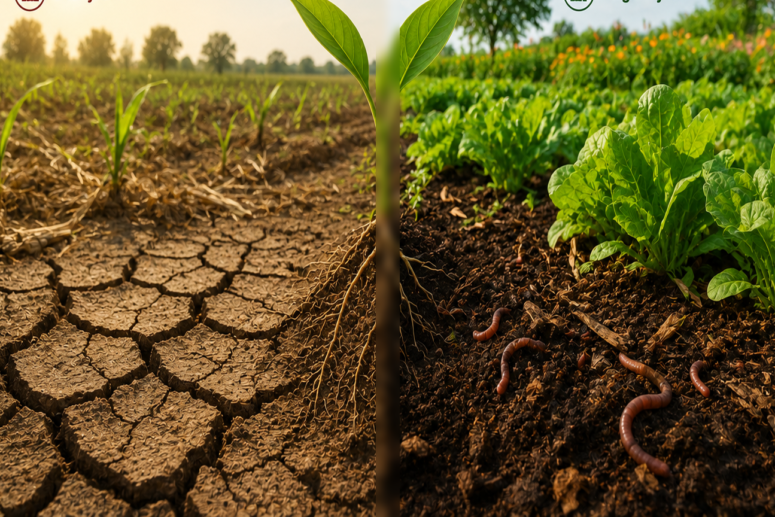
Regenerative farming means farming in a way that improves the land instead of slowly exhausting it.
In simple words, it is about helping the soil become healthier, stronger, and more alive over time so the farm can keep producing well for many years.
Every farm depends on soil. If the soil becomes tired, compacted, dry, or low in organic matter, crops struggle. Regenerative farming tries to fix that by working with nature instead of against it.
It focuses on things like :
- Keeping the soil covered
- Adding compost or other organic matter
- Growing different crops instead of the same crop again and again
- Reducing unnecessary tilling
- Protecting earthworms, microbes, and other helpful life in the soil
- Using water more wisely
Why it matters
Healthy soil does more than hold plants in place. It helps roots grow better, holds moisture for longer, and supports stronger crops. It can also make farms more resilient during heat, dry spells, and sudden weather changes.
That is why many farmers, gardeners, and plantation growers are now paying more attention to soil health. They are not just trying to get one good harvest. They are trying to build a farm that stays productive in the long run.
Think of it like this :
Conventional farming often asks, “How much can I take from this land?”
Regenerative farming asks, “How do I leave this land better than before?”
That is the idea.
What regenerative farming looks like in practice
A regenerative farm may :
-
- Use mulch to protect the soil
- Grow cover crops between main crops
- Rotate crops to avoid overusing the same patch of land
- Add natural inputs like compost, vermicompost, or manure
- Avoid leaving the soil bare
- Manage pests in a smarter, more balanced way
Many farmers already use some of them without calling it regenerative farming.
Why beginners like this idea
One reason regenerative farming is becoming popular is that it feels practical. It does not ask farmers to ignore the land’s condition. It asks them to notice it more carefully.
For a small farmer, that can mean :
• Less wasted water
• Better soil structure
• Fewer problems caused by poor soil
• More stable growth over time
For a hobby gardener, it can mean :
• Healthier potting mix
• Better plant growth
• Less need for harsh inputs
• A more natural way to grow food and flowers
How Biosar fits into this idea
At Biosar, this approach makes a lot of sense because we serve people who want to grow in a more thoughtful, practical way, whether that is a farmer managing a field, a tea garden looking for healthier soil routines, or a hobby gardener trying to grow herbs and vegetables at home. Regenerative farming matches the kind of growing Biosar can support: simple inputs, better soil habits, and clear guidance that helps plants and soil work together. That is why Biosar’s product range and content can naturally support soil-building practices, steady plant nutrition, and easier decision-making for growers of all kinds.
Imagine two plots.
In the first one, the soil is left bare after harvest, tilled heavily, and fed only when the crop looks weak. Over time, the soil may become hard and less productive.
In the second one, the farmer adds compost, keeps the soil covered with mulch, rotates crops, and avoids disturbing the soil too much. Over time, that soil usually becomes softer, richer, and easier to work with.
That second approach is much closer to regenerative farming.
Is it the same as organic farming?
Not exactly.
Organic farming mainly focuses on avoiding synthetic chemicals and using approved natural inputs. Regenerative farming is broader. It focuses on rebuilding soil health and improving the whole system.
The two ideas often overlap, but they are not identical.
The main goal
The main goal of regenerative farming is simple :
1. Leave the land healthier than you found it.
2. That means farms can stay productive, soil can improve instead of decline, and growers can build something more stable for the future.
Regenerative farming is not a fancy trend.
At its core : Care for the Soil, and the Soil will Care for the Crop.
For farmers, tea gardens, and home growers alike, that idea is easy to understand and worth paying attention to.