
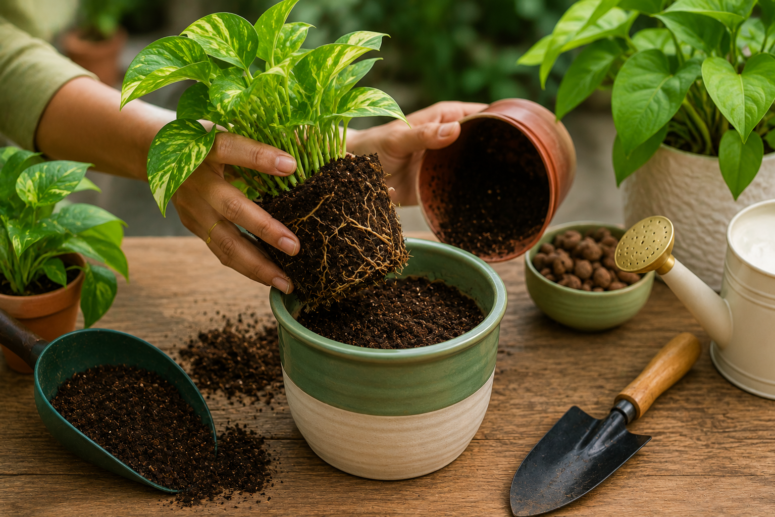
Repotting is supposed to help a plant, not shock it. The trick is to move it gently, give it the right soil, and avoid disturbing the roots more than necessary. Most plants survive repotting well when you keep the process calm and simple.
When a plant needs repotting
A plant usually needs a bigger pot when:
-
-
- Roots are circling the bottom
- Water runs through too fast
- The plant dries out very quickly
- Growth has slowed even though care is fine
- The plant looks top-heavy and keeps falling over
-
The optimal time
The best time to repot is when the plant is actively growing. For many houseplants, that means spring or early warm weather. Try not to re-pot a stressed plant, a flowering plant, or one that is already struggling badly unless it really needs rescue.
Choose a pot that is only slightly bigger
Do not jump to a huge pot. Use one that is just one size larger than the current pot. A pot that is too large can hold too much water and cause root rot.
Make sure the new pot has drainage holes.
Use fresh & Suitable soil
Do not use heavy garden soil in pots. Use a light potting mix that drains well. If the plant likes dry conditions, like succulents, use a mix made for that type of plant. If it likes moisture, use a richer but still airy mix.
Water the plant lightly before repotting
Watering a little before repotting helps the roots and soil hold together better. Do not soak it completely. You just want the root ball to be easier to remove.
Remove the plant gently
Turn the pot on its side and slide the plant out slowly. If it is stuck, tap the sides of the pot instead of pulling hard on the stem.
Try to keep the root ball intact as much as possible.
Look at the roots
Healthy roots are usually firm and light-coloured. If you see black, mushy, or rotten roots, trim those off with clean scissors. If the roots are tightly wrapped around the root ball, loosen them a little with your fingers so they can spread into the new soil.
Place it in the new pot
Add a little fresh soil to the bottom of the new pot first. Put the plant in so it sits at the same depth as before. Do not bury the stem too deeply.
Fill around the sides with fresh soil and press lightly so there are no big air gaps, but do not pack the soil hard.
Water after repotting
Water gently after repotting so the soil settles around the roots. Let excess water drain away completely.
After that, do not keep watering every day. Overwatering is one of the fastest ways to damage a newly re-potted plant.
Give it recovery time
For a few days, keep the plant in bright but indirect light if possible. Avoid strong sun, heavy feeding, or moving it around too much.
A plant may look a little tired for a short while after repotting. That is normal. What you want to avoid is sudden collapse, yellowing from too much water, or root rot from poor drainage.
Common mistakes to avoid
The biggest mistakes are:
-
-
- Using a pot that is too big
- Tearing the roots too much
- Using the wrong soil
- Burying the stem too deep
- Watering too much after repotting
- Repotting a plant that did not need it yet
-
Simple rules to remember
-
-
-
- Bigger pot, but not too big.
- Fresh soil, but not heavy soil.
-
-
Gentle handling, not rough pulling.