
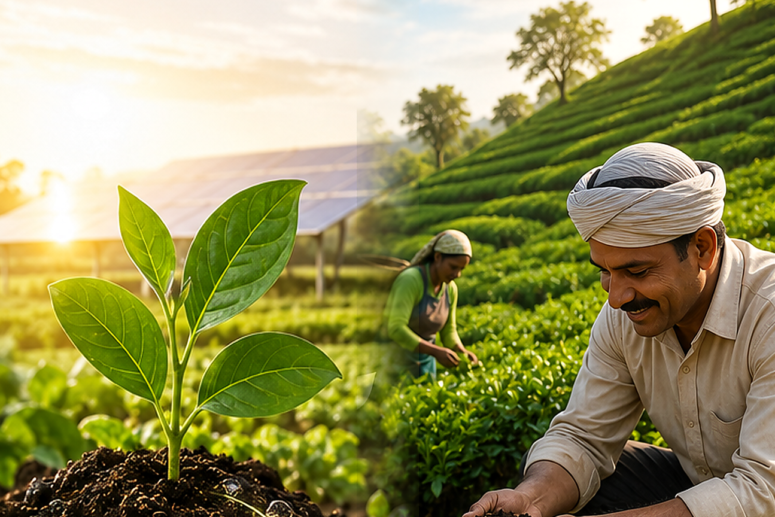
Biosar had its manufacturing facility was validated by RINA S.p.A. and registered under a United Nations carbon-reduction initiative. That matters because, in agriculture, credibility is becoming as important as claims. Buyers, farmers, and partners are increasingly asking not just whether a product works, but whether the company behind it is building for long-term soil health, lower emissions, and traceable sustainability.
The “UN” part is important because it points to a globally recognized climate framework, not just a private marketing label. The official UNFCCC CDM registry is the UN platform used for voluntary cancellation of Certified Emission Reductions, and it was built to provide a transparent way to offset carbon footprints. In other words, an UN-linked carbon-reduction status signals that climate claims are tied to an established international process.
For Indian agriculture, this matters now more than ever. India has already notified the Carbon Credit Trading Scheme, 2023, which lays the groundwork for a national carbon market, and the Ministry of Agriculture has also published a framework for a voluntary carbon market in agriculture. That means the direction of travel is clear: carbon accounting, climate-friendly production, and verifiable environmental performance are becoming part of mainstream agriculture.
Why this is relevant to farmers
For farmers, a company that takes carbon reduction seriously usually also takes soil health seriously. Biosar’s own product pages emphasize bio-fertilisers, organic manure, microbial inputs, and soil-conditioning products that are designed to improve nutrient availability and support healthier soils. That fits the broader shift toward farming systems that build soil carbon, improve water retention, and reduce dependence on harsh inputs.
That is especially relevant in a country like India, where agriculture faces pressure from rising input costs, weather variability, and soil fatigue. A company that is already thinking in climate terms is more likely to design products and support systems that help growers save water, strengthen roots, and reduce waste over time.
Why this matters for tea gardens and plantation crops
This is also meaningful for tea gardens, where long-term soil condition and plantation management matter as much as seasonal output. Biosar’s product pages specifically mention compatibility with tea and other plantation crops for some of its bio-inputs, which makes the climate and soil-health angle more practical, not just symbolic. A climate-aware supplier is better positioned to support plantation customers who need consistency, soil resilience, and lower-risk input choices.
Why it matters for hobby gardeners too
Even for hobby gardeners, the value is real. A company that is thinking about emissions and soil health is usually also thinking about cleaner formulations, better composting logic, and more responsible growing practices. That matters to people who want to grow herbs, vegetables, flowers, or tea plants at home without relying on heavy chemical use.
What it means for the future
In the future, agriculture will not be judged only by yield. It will also be judged by :
-
-
- How much soil it builds,
- How much water it saves,
- How traceable its inputs are, and
- Whether it can prove climate performance.
-
That is why Biosar’s UN-linked carbon-reduction status matters. It suggests the brand is not only selling inputs, but also aligning itself with where agriculture is headed: lower-emission production, better soil stewardship, and more accountable farming systems.
For Indian agriculture, carbon credibility is becoming a business advantage, not just an environmental bonus. If Biosar’s carbon-reduction status is correctly documented and communicated, it can help the brand stand for something bigger than products alone: cleaner soil, smarter inputs, and a more climate-ready future for farms, tea gardens, and home growers alike.