
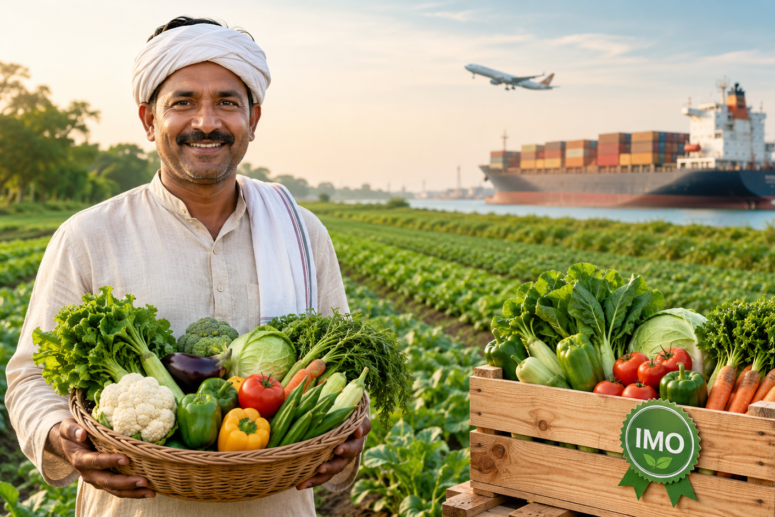
In simple terms, IMO-certified means a farm, processor, or product has been inspected and certified by IMO Control for organic or sustainable-agriculture standards. In India, IMO Control Pvt. Ltd. (IMO India) describes itself as an independent certification body for organic and sustainable agriculture, and APEDA lists it among India’s accredited organic certification bodies under the NPOP system.
That certification matters because export buyers do not just want natural or chemical-free claims. They want proof. For organic goods, that proof usually means documented farming practices, traceability, inspections, and the right certificate for the target market. The USDA says organic production is protected by law and must meet its standards, while EU rules require organic imports to be backed by a certificate from a recognized control authority or control body.
For Indian exporters, this is even more important because APEDA’s TraceNet system is the official process-certification and traceability platform for organic exports from India. APEDA says TraceNet supports forward and backward traceability and quality assurance for products that comply with NPOP standards. In practice, that means IMO certification is not just a label; it is part of the paperwork and traceability chain that helps the crop move through export channels.
Why this helps farmers
The biggest benefit is market access. APEDA states that Indian organic products certified by accredited certification bodies are accepted by importing countries. That opens doors to premium markets where buyers are willing to pay more for verified organic produce, especially when the product can be traced all the way back to the farm.
It also helps with buyer confidence. A buyer in the EU or U.S. is more likely to place an order when the product comes with recognized certification and export documents. For the U.S., USDA says each shipment needs an NOP Import Certificate issued by an accredited certifier. For the EU, organic imports need the appropriate certificate from a recognized control body.
For Indian exporters, the documentation chain is especially important because organic exports typically need a Transaction Certificate under NPOP/TraceNet. PIB notes that a product may be exported as organic only when accompanied by a Transaction Certificate issued by an accredited certification body, and APEDA has separate transaction-certificate formats for the EU, Switzerland, the U.S., and other destinations.
Why premium international markets care so much
Premium markets usually care about three things: how the crop was grown, whether it can be traced, and whether it meets the importing country’s standards. That is why certification bodies, import certificates, and traceability systems matter so much. The EU’s organic import rules and the USDA’s import certificate requirements are designed to keep that chain auditable.
In some markets, there are even extra private standards on top of the legal organic rules. For example, Swiss organic trade can require Bio Suisse compliance for that market, and equivalent organic certification is the basis for that route. So certification can help a farmer not just enter export markets, but enter the more valuable ones where branding and buyer trust are stronger.
Summary
If a product is IMO-certified, it means the crop or operation has been independently checked against recognized organic standards. For a farmer, that can mean:
-
-
- Easier access to export channels,
- Stronger buyer trust,
- Better traceability, and a
- Better chance of reaching premium international buyers.
-